
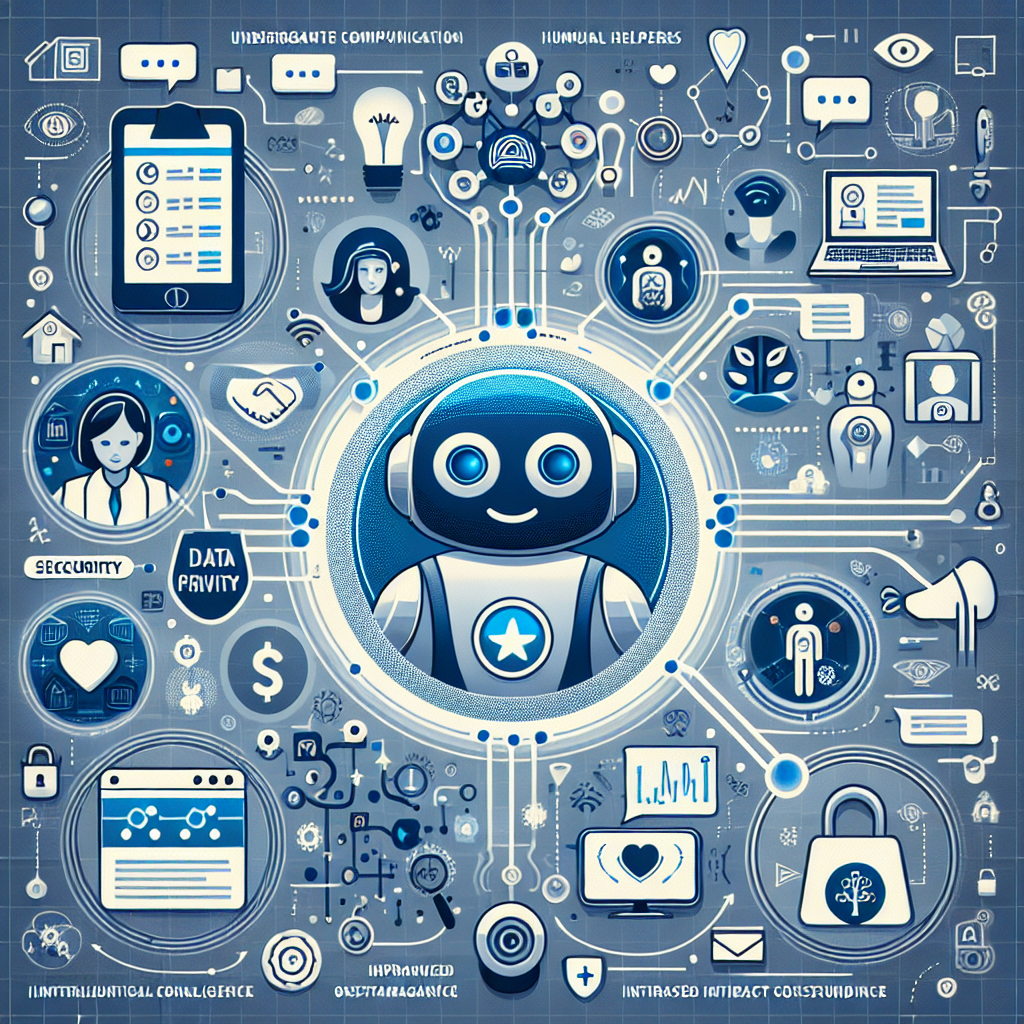
Artificial Intelligence virtual assistants have evolved far beyond simple chatbots, revolutionizing how businesses operate and individuals manage their daily tasks. From healthcare to education, these intelligent helpers are reshaping entire industries with their sophisticated capabilities.
Breaking Down Today’s AI Assistant Capabilities
Modern AI assistants leverage advanced natural language processing through technologies like GPT-3, enabling them to understand and respond to human communication with unprecedented accuracy. These systems can now:
• Handle complex conversations naturally
• Automate multi-step workflows
• Integrate seamlessly with existing software
• Process multiple types of inputs (text, voice, images)
• Learn and adapt to user preferences
Real-World Impact Across Industries
The practical applications of AI assistants are already delivering impressive results:
Healthcare providers use virtual health assistants to offer 24/7 patient support, medication reminders, and preliminary health assessments. In the financial sector, AI-powered tools help detect fraud and provide personalized investment guidance. Educational institutions leverage intelligent tutoring systems to create customized learning experiences.
Perhaps most visibly, customer service has been transformed by AI chatbots that can handle inquiries around the clock, significantly reducing wait times and improving satisfaction rates.
Addressing Key Challenges
While the potential is enormous, several important considerations require attention:
Privacy and Security: Organizations must ensure robust data protection measures and compliance with regulations like GDPR.
Ethical Implementation: Developers are working to eliminate algorithmic bias and increase transparency in AI decision-making processes.
Balanced Integration: Experts emphasize the importance of maintaining human oversight and avoiding over-reliance on AI systems.
The Future of AI Assistants
Exciting developments are on the horizon:
• Enhanced emotional intelligence capabilities
• Improved contextual understanding
• Proactive assistance features
• Specialized industry-specific solutions
As research continues, AI assistants are expected to become even more sophisticated in recognizing human emotions and maintaining context across extended interactions.
Making Smart Implementation Decisions
For organizations considering AI assistant adoption, success depends on:
• Carefully evaluating specific business needs
• Choosing appropriate implementation strategies
• Ensuring proper data security measures
• Providing adequate staff training
• Maintaining human oversight
The technology continues to evolve rapidly, promising even greater capabilities while presenting new opportunities for innovation across sectors. As AI assistants become more integral to daily operations, understanding their potential and limitations becomes crucial for business leaders and technology professionals alike.
For those looking to stay competitive in an increasingly digital world, embracing AI assistant technology while maintaining a thoughtful approach to implementation may well be the key to future success.




0 Comments